
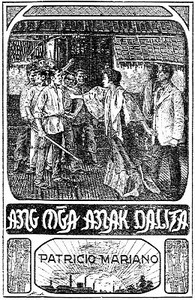
Ang mga Anak Dalita by Patricio Mariano
Patricio Mariano's Ang mga Anak Dalita (The Children of the Poor) is a novel that doesn't just tell a story—it shows you a world. Written in 1914, it's a powerful look at Manila during the American colonial period, seen through the eyes of those struggling just to survive.
The Story
The story centers on Julio, a young man from the slums of Tondo. He's not a revolutionary with a gun; he's an ordinary guy trying to do right by his family. He falls in love with Estrella, a woman from a slightly better-off family, and their relationship becomes the heart of the book. Julio faces constant hurdles: unfair bosses, a system stacked against the poor, and the simple, crushing weight of never having enough. The plot follows his daily battles—finding work, dealing with injustice, and trying to build a future in a society that seems determined to keep him in his place. It’s a slow burn of frustration and small hopes, making you root for him with every page.
Why You Should Read It
First, the characters feel real. Julio isn't a perfect hero; he's flawed and sometimes beaten down, which makes his perseverance mean so much more. Mariano doesn't shout his message; he lets you live it alongside Julio. You feel the heat of the streets, the anxiety of unpaid rent, and the sting of class prejudice. Second, it's a vital piece of Filipino history. This isn't about generals or politicians; it's about the people whose lives were shaped by those in power. The themes of inequality, dignity, and the search for justice are, sadly, not locked in the past. Reading this book gives context to conversations we're still having today.
Final Verdict
This book is perfect for anyone who loves character-driven stories that pack a social punch. If you enjoyed the emotional depth of novels like Rizal's Noli Me Tangere but want a focus on urban struggle, you'll connect with this. It's also a must-read for Filipinos curious about their own history from the ground up. Fair warning: it's not a light, happy read. It's a sobering, thoughtful journey. But it's a journey that sticks with you, offering a profound look at resilience in the face of a system designed to make you fail.
This text is dedicated to the public domain. Knowledge should be free and accessible.
Margaret Anderson
8 months agoThe clarity of the introduction set high expectations, and the way the author breaks down the core concepts is remarkably clear. I'm glad I chose this over the other alternatives.
Elizabeth Rodriguez
4 months agoAfter a thorough walkthrough of the table of contents, the visual layout and supporting data make the reading experience very smooth. Top-tier content that deserves more recognition.
John Anderson
6 months agoFrom a researcher's perspective, the author’s unique perspective adds a fresh layer to the discussion. I'll be citing this in my upcoming project.
Margaret Martinez
2 years agoThis was exactly the kind of deep dive I was searching for, the breakdown of complex theories into digestible segments is masterfully done. The price-to-value ratio here is simply unbeatable.







Barbara Jones
9 months agoThis was exactly the kind of deep dive I was searching for, the case studies and practical examples provided add immense value. An excellent example of how quality digital books should be formatted.