
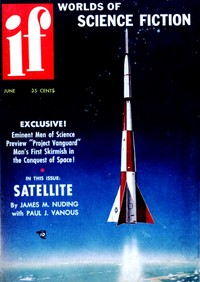
What Shall It Profit? by Poul Anderson
Okay, let's break this down. 'What Shall It Profit?' is a time-travel story, but forget everything you know about heroes jumping in phone booths. Our main character, Brion, is an agent from a future ruled by a brutal galactic empire. A small group of rebels sends him back to our 20th century with a single, monumental task: make an enormous amount of money. They need that future capital to fund their revolution. The brilliant, maddening twist? He has to do it without altering the recorded past in any detectable way. No inventing tech early, no warning about disasters, no playing prophet. He has to work within the strict confines of known history, using only his knowledge of future events to build a financial empire invisibly.
The Story
The plot follows Brion as he lands in the mid-20th century with nothing but his wits and a head full of economic data. We watch him start from scratch, making calculated investments in things he knows will succeed—certain companies, specific commodities, key real estate. The drama isn't in chases or fights; it's in the suspense of a stock ticker and the quiet panic of wondering if a small, charitable donation might ripple out and change a life that was 'supposed' to go another way. The enemy isn't a person, but the entire flow of time itself. Can he amass the fortune needed without leaving a single trace?
Why You Should Read It
I love this book because it makes time travel feel real and incredibly difficult. Anderson was a master of 'hard' science fiction, and here he applies that rigor to economics and history. Brion isn't a swashbuckler; he's a strategist, sweating over ledger books. The book asks fascinating questions: What is history made of? Is it just big wars and famous names, or is it the sum of a billion small, unrecorded transactions? It turns capitalism into a high-wire act and makes you think about the weight of every single choice.
Final Verdict
This is a perfect pick for readers who enjoy smart, idea-driven science fiction. If you like stories where the puzzle is the point—think of the careful plans in 'Ocean's Eleven' but applied to causality—you'll be hooked. It's also great for anyone tired of flashy sci-fi and looking for a more thoughtful, almost philosophical take on time travel. You won't find space battles here, but you will find a gripping, unique story about the most careful and stressful get-rich-quick scheme ever attempted.
This book is widely considered to be in the public domain. You do not need permission to reproduce this work.
Mary Garcia
9 months agoWhile browsing through various academic sources, the emphasis on ethics and sustainability within the topic is commendable. This is a solid reference for both beginners and experts.
Jennifer Thomas
11 months agoAfter spending a few days with this digital edition, the level of detail in the second half of the book is truly impressive. This adds significant depth to my understanding of the field.
Brian Lewis
1 year agoCitation worthy content.
Jessica Wright
1 year agoHaving read this twice, it challenges the reader's perspective in an intellectual way. Don't hesitate to start reading.






Linda Martin
6 months agoThe information is current and very relevant to today's needs.