1

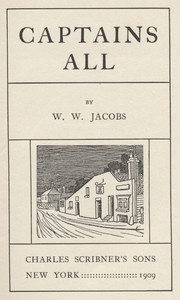
Four Pigeons Captains All, Book 7. — Context and Discussion
8
2
Project Gutenberg
2004
Humorous stories, English; England -- Social life and customs -- Fiction; River life -- Fiction
Readers of public-domain and historical texts
Project Gutenberg digital edition
en
Edition facts
Words: 7,165
Reading time: 32 min
Text sections: 1
Source:
Project Gutenberg record #11187
In 'Four Pigeons,' W.W. Jacobs uses a rustic narrator and dialect to recount a humorous tale of shooting mishaps, poacher Bob Pretty's cunning, and village scheming over compensation money.
Editorial Edition Score
4.4/5
★★★★★
★★★★★
Calculated from edition completeness, EPUB availability, text structure and catalogue metadata. Not a user rating.
Edition quality
The story opens with an old man maneuvering for a free drink at the Cauliflower inn, his feigned deafness and sly hints setting a tone of comic manipulation. This framing device introduces a first-person narrative steeped in Claybury dialect, where the speaker's voice—tremulous, wheedling, and gossipy—colors every event. The tale that follows, about a London gentleman's shooting party and the local poacher Bob Pretty, unfolds through reported speech and rustic commentary, creating a layered effect: we hear the old man's version of events, filtered through his biases and love of ale. Jacobs sustains this voice consistently, with the narrator's asides and digressions mimicking oral storytelling.
Dialect and Narrative Frame
The old man's speech is thick with colloquial contractions ('ain't,' ''eard,' 'wot') and grammatical quirks that anchor the story in a specific rural milieu. His opening gambit—pretending not to hear an offer of ale until he sits closer—establishes him as both unreliable and endearing. This frame is not merely decorative; it distances the reader from the main action, allowing Jacobs to present farcical violence (Bill Chambers being shot) and petty greed with a light touch. The narrator's interruptions, such as his comment on Bill's theatrical groaning, remind us that we are hearing a tale told after the fact, shaped by the teller's amusement.
Pacing Through Dialogue and Repetition
Jacobs controls pace by alternating between brisk dialogue and drawn-out negotiations. The shooting itself is reported almost offhandedly: 'The first day they frightened more than they killed.' But the aftermath—Bill's elaborate complaints, the carrying home, the doctor's visit—unfolds in deliberate, comic detail. Later, the men's haggling over compensation money slows the narrative to a crawl, with each character's reluctance and Bob Pretty's interjections stretching the scene. Repetition of phrases like 'I 'ardly heard you' and 'it 'ud be rude like' creates a rhythmic, almost musical quality that mirrors the circular logic of the villagers' schemes.
Bob Pretty's Verbal Maneuvering
Bob Pretty, the poacher, never appears in violent action; his threat lies in words. He outmaneuvers the villagers by claiming a 'friend' who writes letters, blackmailing them into silence and paying him a share. Jacobs renders Bob's speech with a veneer of politeness—'I'm a pore man, but I'll stick up for my rights'—that masks his control. The climax hinges on a letter-writing bluff, not a physical confrontation. This reliance on indirect coercion suits the story's tone: the real sport is not shooting pheasants but outwitting one's neighbors. Bob's final triumph, extracting money while feigning innocence, completes a pattern where language, not force, decides the outcome.
Readers should attend to how Jacobs uses the old man's voice to filter violence and greed into comedy. The dialect rewards slow reading; the rhythm of repeated phrases and the narrator's asides are central to the humor. Because the excerpts are incomplete, the full resolution of Bob Pretty's scheme remains unclear, but the pattern of verbal trickery suggests a satisfyingly crooked end.
Reader reflection
Before you leave, reflect on the book
Use these questions to collect your thoughts before moving on.
Your progress
0
/
10
2
What was your overall reaction to the book?
3
Would you pass this book on to a friend?
4
What was the reading difficulty like?
5
Would a second reading be valuable?
6
How did the pace of the book feel?
7
Would you start a conversation about this book?
8
Did this book create an emotional response?
9
What changed or sharpened your thinking?
10